 (208) 991-3502
 Meridian, ID






 January 9, 2026
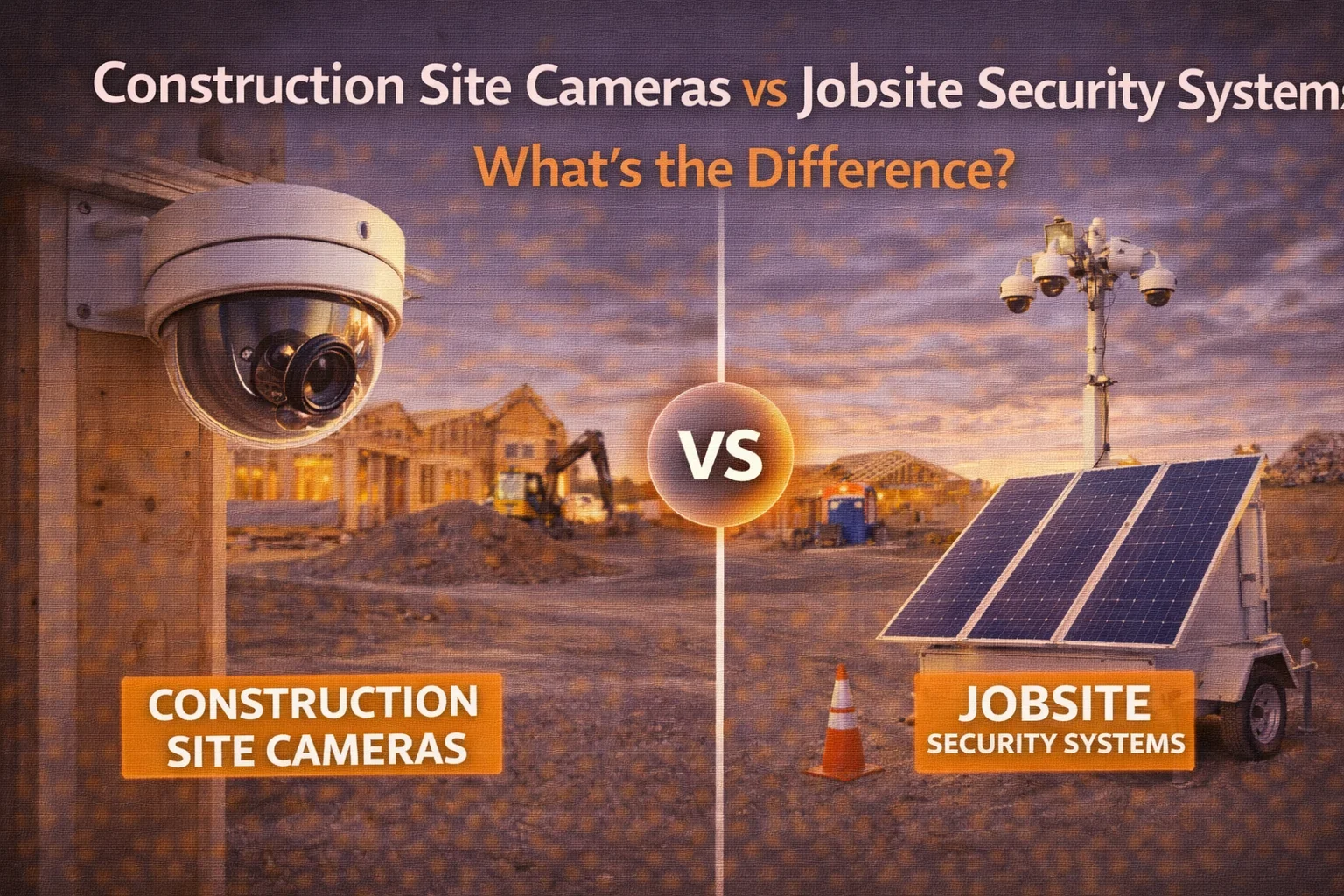
Construction site cameras and jobsite security systems serve different purposes. This guide helps Treasure Valley builders understand the differences and choose the right protection for active jobsites.
When something goes missing from a construction site, cameras are usually the first solution people think of. They’re visible, familiar, and easy to explain. But many builders discover—often after a loss—that cameras alone don’t always provide the protection they expected.
For builders and contractors working across the Treasure Valley, understanding the difference between construction site cameras and full jobsite security systems is critical. While both play a role, they serve very different purposes on an active jobsite.
This guide explains those differences clearly, without technical jargon, so you can choose the right level of protection for your projects.
What Construction Site Cameras Actually Do
Construction site cameras are primarily about visibility.
They allow builders to see what’s happening on site without being physically present. Cameras are useful for monitoring deliveries, checking progress, and reviewing footage if something goes wrong. They also provide documentation, which can be helpful for insurance claims or internal accountability.
In many cases, cameras act as a visual deterrent simply by being visible. Opportunistic theft is often discouraged when a site appears monitored.
That said, cameras are inherently reactive tools. They show what happened—but they don’t necessarily prevent it.
The Limitations Builders Run Into With Cameras Alone
Cameras become less effective when they’re expected to do more than they’re designed for.
On their own, cameras typically don’t alert anyone in real time when something happens. Footage is often reviewed hours or days later, after materials are gone or damage is done. If activity occurs outside a camera’s field of view, it may not be recorded at all.
Builders also run into challenges when cameras are added without proper planning. Poor placement, inadequate lighting, or unreliable connectivity can result in footage that looks fine on paper but provides little real value in practice.
This is where jobsite security systems begin to differ.
What a Jobsite Security System Adds to the Picture
A jobsite security system is designed to provide active awareness, not just documentation.
Rather than relying solely on cameras, these systems are built to detect activity and notify the right people when something is happening. Cameras still play an important role, but they’re part of a broader system that may include motion detection, alerts, and integrated lighting.
The key difference is timing. Security systems allow builders to know about unauthorized activity while it’s happening, not after the fact. That shift—from reaction to awareness—changes how effective security can be on an active site.
Deterrence vs Documentation: The Real Divide
This distinction is at the heart of the decision.
Cameras are excellent at documenting events. Jobsite security systems are designed to prevent those events from happening in the first place.
When a site has visible cameras, lighting, and clear signs of monitoring, it signals risk. Most jobsite theft isn’t planned—it’s opportunistic. If a site looks actively monitored, it’s far less attractive than one that appears unprotected.
Builders who deal with repeated theft or vandalism often discover that deterrence is far more valuable than footage after a loss.
Choosing the Right Approach for Treasure Valley Jobsites
There isn’t a universal answer that applies to every project. The right solution depends on the jobsite itself.
Short-term projects with limited materials may benefit from basic camera coverage. Longer projects, sites with multiple trades, or locations with high material value often require more than visibility alone.
Many builders adopt a layered approach—starting with cameras and adding security system features as the project progresses. This flexibility is especially valuable on jobsites that evolve over time.
This type of planning aligns with broader project strategies similar to those outlined at
👉 https://treasurevalleysolutions.com/services/
where systems are designed around real-world use rather than one-size-fits-all solutions.
Temporary Doesn’t Mean Unsophisticated
A common misconception is that jobsite security must be basic because it’s temporary.
In reality, modern jobsite security systems are specifically designed for temporary environments. They account for changing layouts, limited power, and evolving access points. When planned correctly, temporary systems can be just as reliable and effective as permanent installations.
The difference lies in design—not duration.
Why Professional Planning Makes a Difference
Whether you choose cameras alone or a full jobsite security system, the effectiveness of either depends heavily on how it’s designed and deployed.
Professional planning ensures coverage focuses on meaningful areas, adapts as the site changes, and remains reliable despite weather, power limitations, or connectivity challenges. Poorly planned systems often become ignored, unreliable, or underutilized.
For builders, security should support the job—not become another issue to manage.
Frequently Asked Questions
Are construction site cameras enough on their own?
Sometimes, but they primarily provide documentation. Many sites benefit from systems that add alerts and deterrence.
Can jobsite security systems be temporary?
Yes. Many are designed specifically for temporary construction use.
Is a full system more expensive than cameras?
Upfront costs may be higher, but a single theft can exceed the cost of proactive protection.
Can systems scale as a project grows?
Yes. Well-designed systems can expand or adapt as site conditions change.
Does installation quality really matter?
Absolutely. Placement and reliability directly affect effectiveness.
Making the Right Choice for Your Jobsite
Construction site cameras and jobsite security systems are not competing solutions—they solve different problems.
Cameras help you see what happened. Jobsite security systems help you prevent problems from happening at all.
For Treasure Valley builders and contractors, understanding this difference leads to smarter decisions, fewer losses, and better project continuity. When security is planned intentionally, it becomes a quiet, reliable part of the jobsite—exactly where it belongs.